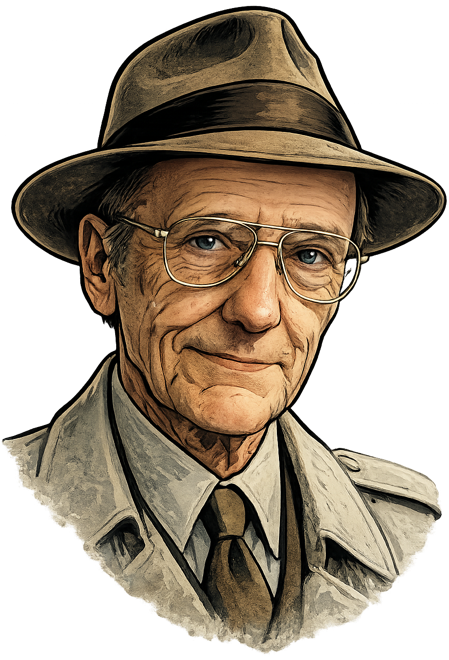

ABOUT NIGHT WATCHMEN
The stories behind the Night Watchmen collection
The characters in the Night Watchmen collection come from folklore traditions around the world — tricksters, shapeshifters, and antiheroes. Morally ambiguous archetypes who know how to survive.
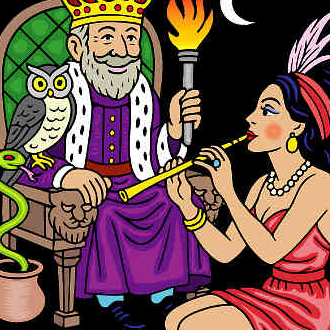
WHAT ARE TRICKSTER FIGURES?
Tricksters appear in the folklore of nearly every culture. They're clever, adaptable figures who break rules, cross boundaries, and see things others miss. Some are helpful, some are mischievous, and many are both.
What makes tricksters interesting isn't that they're heroes or villains—it's that they're survivors. They figure out how to navigate difficult situations through wit, observation, and creative thinking rather than force.
In many traditions, trickster figures are associated with thresholds and transitions: crossroads, doorways, dawn and dusk. They're comfortable in the in-between places where others feel uncertain.
TRICKSTERS AROUND THE WORLD
Coyote
The trickster of Native American traditions across the Southwest and Great Plains. Both creator and fool, he brings fire to humanity and loses his eyes gambling—often in the same story cycle.
Eshu
The Yoruba orisha of crossroads, messages, and chance. Neither good nor evil, Eshu tests humans, carries prayers between worlds, and reminds us that communication is never neutral.
Gnostic Jesus
In texts like the Second Treatise of the Great Seth, Christ laughs at his crucifixion while a substitute suffers in his place—the ultimate cosmic trickster, outwitting the rulers of this world.
High John the Conqueror
Born from African American folklore during slavery, High John outsmarted masters, escaped every trap, and could never be held. His root remains a symbol of luck, protection, and quiet defiance.
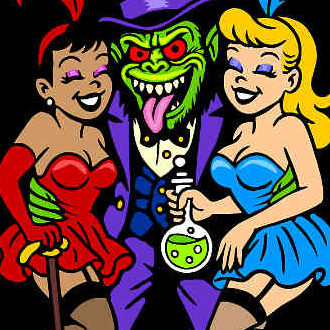
Mr. Hyde
Stevenson's shadow-self who walks freely where Dr. Jekyll cannot. The trickster as the repressed truth—what happens when civilization's mask slips and the creature underneath goes prowling.
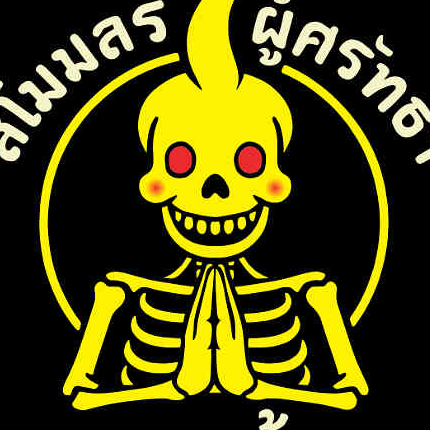
Phra Ngang
A Thai folk spirit of charm, mischief, and protection. Often depicted as a meditating figure with a roguish grin, Phra Ngang helps those who honor him—and plays tricks on those who don't.
WHY STUDY TRICKSTERS?
Trickster stories aren't just entertainment—they're a kind of practical wisdom. They teach that problems can be solved in unexpected ways, that rules aren't always what they seem, and that paying attention is often more useful than following instructions.
In confusing times, when the usual approaches don't seem to work, trickster wisdom becomes especially relevant. These figures remind us that adaptability, humor, and creative thinking are valuable survival skills.